
Category: Human Rights

  • The 70% Blueprint –
Big Ideas for Big Coalitions

    The 70% Blueprint – Big Ideas for Big Coalitions

    What would it take to win the next presidential election with over 70% of the vote?

    In the middle of 2025, as U.S. forces moved into another conflict in the Middle East, protests swept across America. Millions of people—young and old, left and right—took to the streets under the banner “No Kings.” It wasn’t just about one party or one president. It was a rejection of government by ego, profit, and power.

    At the same time, former President Trump was making headlines again—not for policy, but for launching “Trump Coin,” a cryptocurrency wrapped in controversy and self-enrichment. Add to that a new immigration bill he called “Big and Beautiful,” which cut healthcare for working families while giving more breaks to the rich.

    It all begs the question: is it even possible for any candidate to win in 2028—not just barely—but with over 70% of the vote?

    It is. But it would take more than promises or party loyalty. It would take leadership that meets Americans where they are—tired, divided, and deeply unsure if the system works for them anymore.

    Here’s what that kind of candidate would need to offer:


    1. A Fair Shot at a Better Job

    Right now, too many Americans are stuck in dead-end jobs—or jobs that barely pay enough to survive. College is too expensive. Trade programs are hard to access. And many don’t even know where to start.

    That’s why a winning candidate should offer a Skills Guarantee: Every adult gets free, job-ready training every five years—no matter where they live or what they do. Think welding, solar, cybersecurity, nursing, logistics. No debt. No red tape.

    For rural voters? It’s a lifeline.
    For young people? A real future.
    For working-class voters across all races? A reason to believe again.


    2. Bring Democracy Back to the People

    Trust in government is at an all-time low. Many Americans feel like they vote, then nothing changes. Some believe elections are rigged. Others just feel ignored.

    So let’s change that with a Civic Infrastructure Plan:

    • Hire trained Democracy Fellows in every county to explain laws, host community meetings, and answer questions—face to face.
    • Teach real civics and media literacy in every high school—so kids learn how democracy works and how to spot misinformation.
    • Upgrade voting systems to be open-source, fully auditable, and easy to trust.

    This isn’t about Republicans or Democrats. It’s about giving everyone a real voice again.


    3. When Businesses Win, Workers Should Too

    America’s biggest companies are doing great. Stock markets are up. CEOs are richer than ever. But millions of workers haven’t gotten a raise that keeps up with the cost of living. That’s not fair.

    So let’s fix it with a National Upside Dividend:
    If a company grows, adds jobs, and treats workers fairly—they get tax breaks. But only if they share profits with employees making under $80,000. Bonuses. Stock. Real money.

    That way, business success becomes everyone’s success.


    4. Clean Up Politics—for Real

    After scandals like “Trump Coin” and secret deals, Americans are done trusting politicians to police themselves. A winning candidate must promise to:

    • Ban politicians from launching or profiting from crypto, stocks, or business ventures while in office.
    • Publish real-time financial disclosures online, visible to every voter.
    • Enforce strict rules on campaign money, lobbying, and family business ties.

    Corruption isn’t a partisan issue. It’s a democracy issue.


    5. Fix Immigration with Heart and Logic

    People want secure borders—but they also want a system that works, respects human dignity, and helps our economy grow.

    A smart, fair immigration policy would:

    • Fast-track residency for immigrants who start businesses and create jobs.
    • Offer work-based pathways to legal status, especially in health care, farming, and tech.
    • Modernize border security with tech, not just walls—while keeping families together and safe.

    6. Fight Fake News and AI-Driven Lies

    One of the biggest threats to our democracy now? Lies that spread faster than facts.
    AI can generate fake videos. Social media platforms show us what keeps us angry—not what’s true. And bad actors—from political groups to foreign governments—are gaming the system.

    A 70% candidate would:

    • Push social media companies to disclose how algorithms work—and let users choose chronological feeds, not manipulated ones.
    • Require watermarks and disclosure labels for AI-generated content in political ads and videos.
    • Create a nonpartisan Digital Integrity Office to review and report major online election threats in real time.

    This isn’t about censorship. It’s about protecting truth.


    7. Lead the World by Example—Again

    The world is watching. From the war in Iran to crackdowns on free speech in allied countries, America’s moral leadership is being questioned. Human rights, once our proudest export, are fading from our foreign policy.

    A candidate who earns a super-majority must restore that leadership by:

    • Holding allies accountable on democracy and civil liberties.
    • Doubling down on humanitarian support and rule-of-law institutions.
    • Living the values we claim—transparency, fairness, and freedom—right here at home.

    Final Thought: This Isn’t About Left or Right—It’s About Forward

    To win 70% of the vote, you don’t need every voter to agree with everything. You just need enough of them to believe you’re fighting for them, not for yourself.

    That means offering real solutions—not blame. Respect—not spin. And proof—not just promises.

    The protests, the scandals, the wars, the chaos—they’ve left Americans tired. But not hopeless. There’s still time to run not as a king, not as a brand, but as a builder. A restorer. A listener.

    That’s how you get not just a win—but a mandate.

    And maybe, just maybe, a country more united than we ever thought possible.
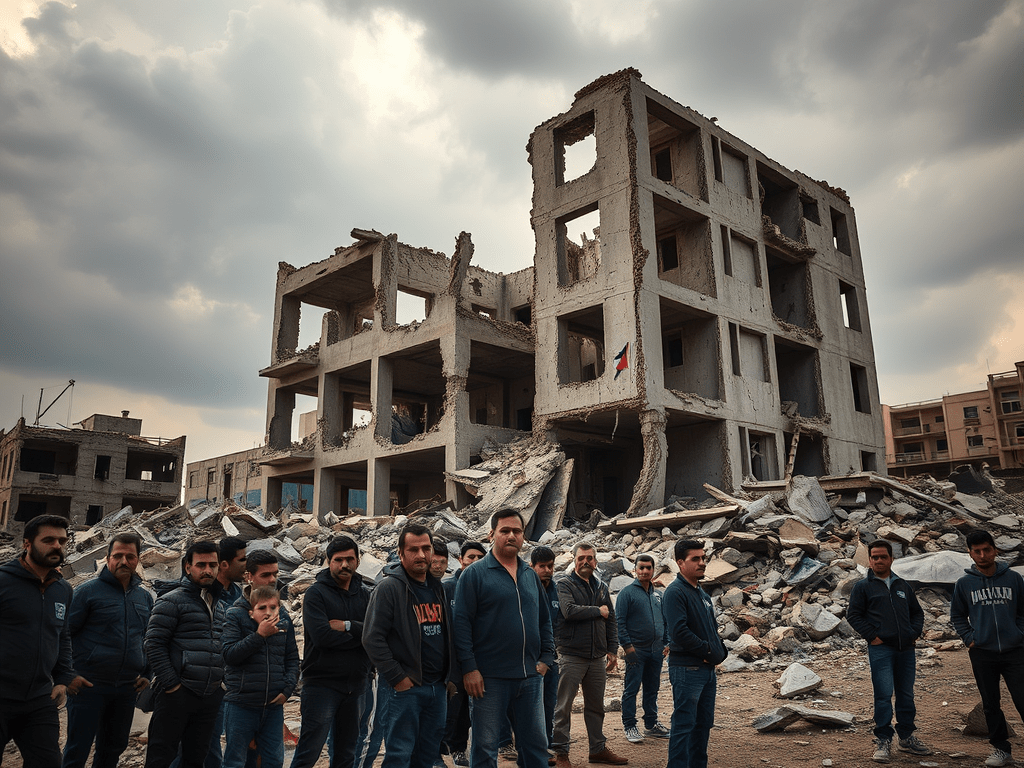
  • Understanding the Israel-Palestine Conflict: Historical Roots and Human Rights

    Understanding the Israel-Palestine Conflict: Historical Roots and Human Rights

    Introduction

    The Israel-Palestine conflict remains one of the most enduring and devastating crises in modern history, with profound implications for human rights and world peace. The ongoing violence, coupled with shifting global power dynamics—particularly the United States’ reduced involvement in world affairs—has further complicated the path toward resolution. As Israel continues its military bombardments in Gaza and the West Bank, the humanitarian crisis deepens, raising urgent questions about international intervention and the future of the region.

    Historical Context: The Roots of the Conflict

    The Israel-Palestine conflict dates back to the early 20th century, when tensions between Jewish and Arab communities in British-controlled Palestine escalated. Following World War II and the Holocaust, global support for a Jewish homeland led to the establishment of Israel in 1948, triggering the first Arab-Israeli war. Palestinians, who had lived in the territory for centuries, were displaced in what they call the Nakba (catastrophe), leading to decades of strife.

    Subsequent wars (1956, 1967, 1973) and ongoing territorial disputes, including Israeli occupation of Palestinian lands, have fueled violence and resistance. The Oslo Accords (1993–1995) attempted to create a framework for peace, but the process collapsed due to continued settlement expansions, Palestinian uprisings (Intifadas), and political divisions. Today, Gaza remains under an Israeli blockade, and the West Bank faces expanding Israeli settlements, leaving Palestinians with little sovereignty.

    Human Rights Violations in the Conflict

    The Israel-Palestine conflict is a stark example of systemic human rights violations. In Gaza, Israeli airstrikes have led to mass civilian casualties, destruction of homes, and severe restrictions on food, water, and medical supplies. The blockade has created what the UN calls an “open-air prison,” with over two million people lacking basic necessities.

    On the other hand, Israeli civilians have also suffered from rocket attacks and acts of terrorism by militant groups like Hamas. However, the disproportionate use of force by Israel and the lack of accountability for civilian deaths have drawn widespread criticism from human rights organizations. Reports from groups like Amnesty International and Human Rights Watch have labeled Israeli actions as apartheid, citing discriminatory laws and policies against Palestinians.

    The U.S. Withdrawal and Its Global Implications

    For decades, the United States has played a central role in mediating the Israel-Palestine conflict. However, recent shifts in global power have seen the U.S. take a backseat in world affairs, with other actors—such as China, Russia, and regional powers like Iran and Turkey—filling the void.

    Without strong U.S. mediation, several key consequences emerge:

    1. Escalation of Military Action – Israel may feel emboldened to continue military operations without fear of U.S. intervention, leading to prolonged conflict and more civilian casualties.
    2. Humanitarian Crisis Worsens – The lack of international pressure could further restrict humanitarian aid, worsening living conditions in Gaza and the West Bank.
    3. Emerging Geopolitical Players – China and Russia may increase their diplomatic influence, reshaping Middle East politics in unpredictable ways.
    4. Regional Instability – With Iran’s growing involvement and increased activity from militant groups, the conflict could escalate into a broader regional war, drawing in countries like Lebanon and Syria.

    Impact on World Peace and Stability

    The ongoing conflict has far-reaching consequences beyond the Middle East. It fuels extremism, increases refugee crises, and exacerbates divisions in global politics. The international community’s failure to address Palestinian suffering undermines the credibility of human rights institutions and creates a precedent where military power overshadows justice.

    Furthermore, instability in the region affects global economic and energy markets. Rising tensions can lead to oil price fluctuations, disrupt trade routes, and contribute to economic downturns worldwide.

    The Path Forward: A Call for Justice and Diplomacy

    For lasting peace, a renewed commitment to diplomacy, human rights, and international law is essential. A two-state solution remains the most widely supported path, but it requires genuine political will from global powers, including the U.S., the EU, and Middle Eastern nations. Key steps include:

    • Ending the blockade on Gaza to allow humanitarian aid and reconstruction.
    • Halt Israeli settlement expansion in the West Bank to preserve the possibility of a Palestinian state.
    • Promoting accountability through international legal mechanisms to address war crimes on both sides.
    • Encouraging regional cooperation with Arab states playing a more active role in mediation.

    Conclusion

    The Israel-Palestine conflict remains a profound test of human rights and global governance. The world’s failure to act decisively continues to fuel suffering, deepen regional instability, and threaten global peace. As the U.S. steps back from its traditional leadership role, the need for a balanced, just, and sustainable resolution has never been more urgent. Only through a commitment to diplomacy, justice, and humanitarian aid can the cycle of violence be broken and peace achieved.