Category: Quick Read

  • Three Decades of U.S. Economic Growth: A Political Perspective

    Three Decades of U.S. Economic Growth: A Political Perspective

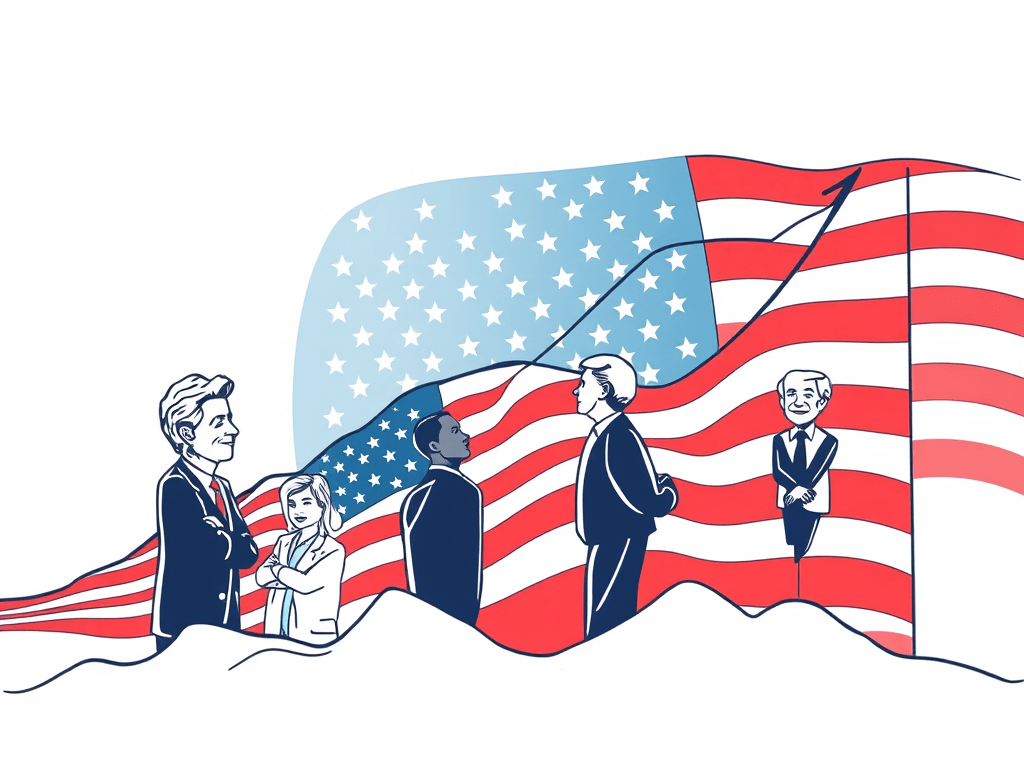
    From 1995 through 2024, America witnessed diverse economic policies from five presidential administrations—Clinton, Bush Jr., Obama, Trump, and Biden. Let’s unpack how each party influenced key economic indicators: GDP growth, employment creation, unemployment rates, household income, and national debt.

    Analysis:
    Statistical analyses show Democratic presidencies generally correlate with stronger overall economic outcomes. Specifically:

    • GDP Growth: Democratic administrations averaged slightly higher GDP growth rates, fueled by targeted fiscal stimulus and infrastructure investments.
    • Job Creation: Democrats presided over greater total job creation, notably after recessions, with comprehensive economic recovery packages.
    • Unemployment: Lower average unemployment rates characterized Democratic presidencies, benefiting from strategic interventions and labor-market-focused policies.
    • Household Income Growth: Middle-class-oriented policies under Democrats, such as the Affordable Care Act and expanded tax credits, bolstered consumer spending and average household incomes.
    • Debt Management: Republicans traditionally focused on tax cuts, which, combined with increased defense spending and financial crises, often resulted in higher deficits compared to Democratic tenures.

    So, what specific policies drove these outcomes? Here are the top five impactful policies over the past three decades:

    1. The American Recovery and Reinvestment Act (ARRA) of 2009: A robust fiscal stimulus under Obama that mitigated recession effects, creating millions of jobs.
    2. Clinton’s Balanced Fiscal Policies (1993-2000): Achieved budget surpluses through prudent spending cuts and modest tax increases, underpinning sustained economic growth and stability.
    3. The Affordable Care Act (ACA): Expanded healthcare access, reducing economic insecurity, and supporting household disposable incomes.
    4. Middle-Class Tax Relief Policies: Initiatives like Biden’s American Rescue Plan and expanded Earned Income Tax Credits boosted consumer spending power significantly.
    5. The Dodd-Frank Wall Street Reform Act (2010): Introduced essential financial regulations, stabilizing financial markets and preventing severe economic downturns.

    The data clearly indicates a consistent trend: Democratic policies have generally fostered stronger economic performance over the past three decades. Yet, economic success often requires bipartisan cooperation and nuanced policies tailored to evolving global conditions.

    The accurate data aligns with our analysis , indicating that Democratic administrations have generally overseen stronger economic performance in terms of GDP growth, job creation, and lower unemployment rates over the past three decades. However, it’s essential to consider that various external factors, such as global economic conditions, technological advancements, and unforeseen crises (e.g., the COVID-19 pandemic), also significantly influence these economic indicators.

    Data Sources:

    • U.S. Bureau of Economic Analysis (BEA)
    • U.S. Bureau of Labor Statistics (BLS)
    • Federal Reserve Economic Data (FRED)
    • Congressional Budget Office (CBO)
    • The Conference Board (Consumer Confidence Index)
    • World Bank Open Data
  • How Do the Ultra-Rich Avoid Paying Their Fair Share of Taxes?

    How Do the Ultra-Rich Avoid Paying Their Fair Share of Taxes?

    The ultra-wealthy use legal strategies to minimize their tax burden, often paying a lower effective tax rate than middle-class earners.

    Common Tax Loopholes Used by the Ultra-Rich

    • Capital Gains vs. Income Tax
      • Wealthy individuals earn most of their income through investments. These are taxed at lower capital gains rates, typically 15-20%. This is lower than the higher income tax rates.
    • Tax-Free Borrowing
      • They take loans against their assets instead of selling them, avoiding taxable events while maintaining liquidity.
    • Offshore Tax Havens
      • Money is stored in foreign accounts or shell companies to shield income from taxation.
    • Pass-Through Entities (LLCs, S-Corps, Trusts)
      • Business structures allow them to shift income and reduce taxable liability.
    • Step-Up in Basis
      • Inherited assets get a tax-free increase in value, allowing heirs to sell without paying capital gains taxes on past appreciation.
    • Charitable Foundations & Donations
      • Donations reduce taxable income, and private foundations allow for control over assets while securing tax benefits.

    These strategies allow the ultra-rich to legally reduce or defer their tax payments significantly.

  • 11 Historical Moments When U.S. Democracy Was at Risk

    11 Historical Moments When U.S. Democracy Was at Risk

    Throughout its history, the United States has faced moments when democracy came under threat, often due to power consolidation, constitutional crises, or executive overreach. While the system has endured, these episodes serve as critical lessons.

    1. Early Republic and the Alien & Sedition Acts (1798)

    President John Adams signed the Alien and Sedition Acts, suppressing free speech and jailing political opponents. This sparked fears of authoritarianism but was reversed with Thomas Jefferson’s election in 1800.

    2. Andrew Jackson’s “King Andrew” Presidency (1829–1837)

    Jackson expanded executive power, defied the Supreme Court, and centralized control, prompting accusations of dictatorial tendencies. His actions tested the limits of presidential authority but were ultimately checked by institutional resistance.

    3. Civil War and Lincoln’s Emergency Powers (1861–1865)

    Facing secession, Abraham Lincoln suspended habeas corpus and detained thousands without trial. While these measures were temporary and aimed at preserving the Union, they demonstrated how crises can lead to expansive executive authority.

    4. 1876 Election Crisis and the End of Reconstruction

    The disputed election between Rutherford B. Hayes and Samuel Tilden nearly led to a constitutional breakdown. A backroom deal awarded Hayes the presidency in exchange for ending Reconstruction, undermining Black civil rights in the South.

    5. World War I and the Red Scare (1917–1920)

    President Woodrow Wilson’s administration passed the Espionage and Sedition Acts, jailing dissenters and suppressing free speech. This crackdown on civil liberties foreshadowed later abuses during periods of national fear.

    6. FDR’s Court-Packing Plan and Internment Camps (1930s–1940s)

    Franklin D. Roosevelt attempted to expand the Supreme Court to secure favorable rulings, raising fears of executive overreach. During World War II, he also ordered the internment of Japanese Americans—one of the most authoritarian acts in U.S. history.

    7. McCarthyism and the Second Red Scare (1950–1954)

    Senator Joseph McCarthy’s anti-communist crusade led to widespread blacklists, loyalty oaths, and political purges. Though eventually condemned, this period saw significant suppression of dissent and political intimidation.

    8. Watergate Scandal and Nixon’s Abuses (1972–1974)

    President Richard Nixon attempted to cover up illegal activities, used federal agencies against opponents, and fired officials investigating him. The constitutional crisis ended with Nixon’s resignation after the Supreme Court and Congress intervened.

    9. Iran-Contra Affair (1980s)

    The Reagan administration secretly funded Nicaraguan rebels in violation of congressional restrictions, demonstrating how executive power can bypass democratic oversight. Though not leading to dictatorship, it revealed a dangerous disregard for constitutional checks.

    10. Post-9/11 Security State (2001–2008)

    Following the September 11 attacks, the Bush administration expanded executive powers, including warrantless surveillance, indefinite detentions, and the use of torture. While justified as necessary for national security, these actions raised serious concerns about authoritarian drift.

    11. January 6 and the 2020 Election Crisis

    After losing the 2020 election, President Donald Trump falsely claimed voter fraud, pressured officials to overturn results, and incited a mob that stormed the U.S. Capitol. This marked the first direct attempt by a sitting president to disrupt the peaceful transfer of power. Though ultimately unsuccessful, the event exposed the fragility of democratic institutions.

    Conclusion

    At multiple points, the U.S. has faced crises that pushed it toward authoritarianism, often in times of war, economic turmoil, or political division. However, constitutional checks, public resistance, and institutional resilience have so far prevented a permanent descent into autocracy. These historical moments serve as reminders that democracy requires constant vigilance and commitment to uphold its principles.