
Category: Violence

  • Understanding the Israel-Palestine Conflict: Historical Roots and Human Rights

    Understanding the Israel-Palestine Conflict: Historical Roots and Human Rights

    Introduction

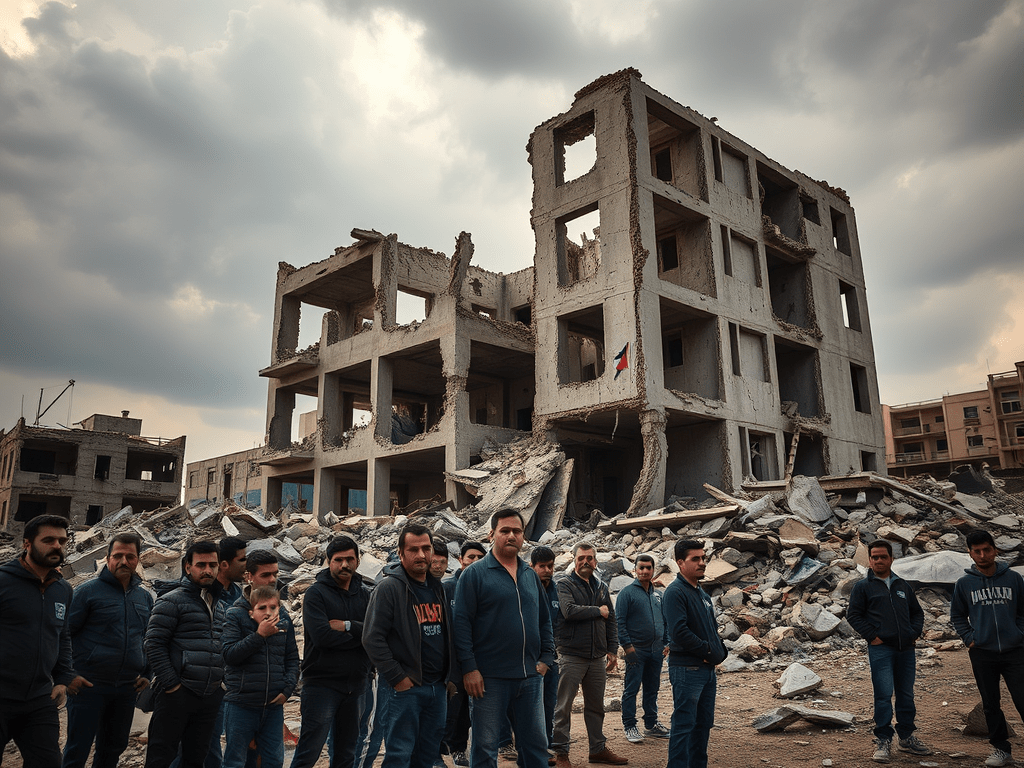
    The Israel-Palestine conflict remains one of the most enduring and devastating crises in modern history, with profound implications for human rights and world peace. The ongoing violence, coupled with shifting global power dynamics—particularly the United States’ reduced involvement in world affairs—has further complicated the path toward resolution. As Israel continues its military bombardments in Gaza and the West Bank, the humanitarian crisis deepens, raising urgent questions about international intervention and the future of the region.

    Historical Context: The Roots of the Conflict

    The Israel-Palestine conflict dates back to the early 20th century, when tensions between Jewish and Arab communities in British-controlled Palestine escalated. Following World War II and the Holocaust, global support for a Jewish homeland led to the establishment of Israel in 1948, triggering the first Arab-Israeli war. Palestinians, who had lived in the territory for centuries, were displaced in what they call the Nakba (catastrophe), leading to decades of strife.

    Subsequent wars (1956, 1967, 1973) and ongoing territorial disputes, including Israeli occupation of Palestinian lands, have fueled violence and resistance. The Oslo Accords (1993–1995) attempted to create a framework for peace, but the process collapsed due to continued settlement expansions, Palestinian uprisings (Intifadas), and political divisions. Today, Gaza remains under an Israeli blockade, and the West Bank faces expanding Israeli settlements, leaving Palestinians with little sovereignty.

    Human Rights Violations in the Conflict

    The Israel-Palestine conflict is a stark example of systemic human rights violations. In Gaza, Israeli airstrikes have led to mass civilian casualties, destruction of homes, and severe restrictions on food, water, and medical supplies. The blockade has created what the UN calls an “open-air prison,” with over two million people lacking basic necessities.

    On the other hand, Israeli civilians have also suffered from rocket attacks and acts of terrorism by militant groups like Hamas. However, the disproportionate use of force by Israel and the lack of accountability for civilian deaths have drawn widespread criticism from human rights organizations. Reports from groups like Amnesty International and Human Rights Watch have labeled Israeli actions as apartheid, citing discriminatory laws and policies against Palestinians.

    The U.S. Withdrawal and Its Global Implications

    For decades, the United States has played a central role in mediating the Israel-Palestine conflict. However, recent shifts in global power have seen the U.S. take a backseat in world affairs, with other actors—such as China, Russia, and regional powers like Iran and Turkey—filling the void.

    Without strong U.S. mediation, several key consequences emerge:

    1. Escalation of Military Action – Israel may feel emboldened to continue military operations without fear of U.S. intervention, leading to prolonged conflict and more civilian casualties.
    2. Humanitarian Crisis Worsens – The lack of international pressure could further restrict humanitarian aid, worsening living conditions in Gaza and the West Bank.
    3. Emerging Geopolitical Players – China and Russia may increase their diplomatic influence, reshaping Middle East politics in unpredictable ways.
    4. Regional Instability – With Iran’s growing involvement and increased activity from militant groups, the conflict could escalate into a broader regional war, drawing in countries like Lebanon and Syria.

    Impact on World Peace and Stability

    The ongoing conflict has far-reaching consequences beyond the Middle East. It fuels extremism, increases refugee crises, and exacerbates divisions in global politics. The international community’s failure to address Palestinian suffering undermines the credibility of human rights institutions and creates a precedent where military power overshadows justice.

    Furthermore, instability in the region affects global economic and energy markets. Rising tensions can lead to oil price fluctuations, disrupt trade routes, and contribute to economic downturns worldwide.

    The Path Forward: A Call for Justice and Diplomacy

    For lasting peace, a renewed commitment to diplomacy, human rights, and international law is essential. A two-state solution remains the most widely supported path, but it requires genuine political will from global powers, including the U.S., the EU, and Middle Eastern nations. Key steps include:

    • Ending the blockade on Gaza to allow humanitarian aid and reconstruction.
    • Halt Israeli settlement expansion in the West Bank to preserve the possibility of a Palestinian state.
    • Promoting accountability through international legal mechanisms to address war crimes on both sides.
    • Encouraging regional cooperation with Arab states playing a more active role in mediation.

    Conclusion

    The Israel-Palestine conflict remains a profound test of human rights and global governance. The world’s failure to act decisively continues to fuel suffering, deepen regional instability, and threaten global peace. As the U.S. steps back from its traditional leadership role, the need for a balanced, just, and sustainable resolution has never been more urgent. Only through a commitment to diplomacy, justice, and humanitarian aid can the cycle of violence be broken and peace achieved.
  • State of The Union, March 25

    State of The Union, March 25

    As of March 18, 2025, President Donald Trump’s administration has taken several actions. These actions have significantly affected various aspects of U.S. governance. They also affected international relations and domestic policies. Notably, recent developments indicate a potential shift in U.S.-Russia relations, which could have profound implications for longstanding alliances and global stability. ​

    1. Democratic Institutions:

    • Project 2025 Implementation: The administration is advancing “Project 2025.” It is a comprehensive plan aiming to restructure the executive branch. The goal is to align more closely with conservative ideologies. Critics argue that this initiative could undermine checks and balances, centralize power, and erode democratic norms. ​

    2. National Security:

    • Erosion of NATO Commitments: President Trump’s recent statements have cast doubt on the United States’ willingness to uphold NATO’s Article 5 mutual defense clause. They have created uncertainty about America’s commitment. This is particularly concerning for allies not meeting defense spending targets. This ambiguity has raised concerns about the credibility of the U.S. commitment to collective defense and the potential weakening of the alliance. ​
    • U.S.-Russia Engagement: The administration is working to improve relations with Russia. This includes discussions about reducing hostilities in Ukraine. These efforts have unsettled NATO allies. These moves are perceived as a shift away from traditional U.S. foreign policy and have led to apprehension regarding the alliance’s unity and effectiveness. ​

    3. Liberty and Freedom:

    • Assault on Media and Academic Institutions: The administration has taken unprecedented actions against media outlets. It has also targeted academic institutions. These actions include lawsuits against networks. There have been funding cuts to universities hosting protests. Such measures are viewed as attempts to suppress dissent and undermine freedoms of speech and assembly. ​

    4. Economy:

    • Trade Policies and Tariffs: Tariffs have been reintroduced on imports from key trading partners like Canada, Mexico, and China. These actions have led to increased inflation. They have also slowed economic growth. Economists forecast a decrease in U.S. economic growth to 1.6% in 2025, down from 2.3% previously predicted, attributing this slowdown to the administration’s trade policies.

    5. Education:

    • Threats to Academic Freedom: Policies targeting universities, particularly those perceived as opposing administration views, threaten academic freedom. Funding cuts and other punitive measures could stifle open discourse and critical thinking within educational institutions.

    6. Human Health:

    • Healthcare Policy Shifts: Efforts to dismantle existing healthcare frameworks without viable replacements have raised concerns. These concerns include increased uninsured rates and reduced access to medical services. This situation could potentially lead to poorer health outcomes.​

    7. World Peace:

    • U.S.-Russia Negotiations on Ukraine: President Trump’s engagement with President Putin has led to a preliminary agreement to reduce missile and drone attacks in Ukraine. However, the exclusion of Ukraine from direct talks raises concerns. The lack of comprehensive conflict resolution also raises concerns about the effectiveness and sincerity of these efforts. ​

    8. Law and Order:

    • Justice Department Restructuring: The administration is making moves to assert greater control over the Department of Justice. This includes the dismissal of inspectors general. These actions have raised alarms about the potential erosion of judicial independence and the rule of law. ​

    9. Relationships with Allies:

    • Strained NATO Relations: The administration’s unpredictable foreign policy has strained relationships with traditional allies. A perceived pivot toward Russia also contributes to this tension. European leaders express skepticism about the reliability of U.S. security commitments, prompting discussions about increasing defense spending and developing independent defense capabilities.

    In summary, the current administration’s policies and actions have introduced significant shifts in both domestic and international arenas. The potential U.S.-Russia rapprochement poses challenges to established alliances. It could lead to a realignment of global power structures. This has far-reaching implications for democratic institutions, economic stability, and international peace.

    Sources:

    Financial Times
    CBS News
    Vox
    Vanity Fair
    Wikipedia
    Business Insider
    Vanity Fair

  • Understanding Gun Violence: A Public Health Crisis in America

    Gun violence remains a critical public health issue in the United States. Each year, approximately 40,000 people lose their lives to gun-related incidents, including homicides, suicides, and accidental shootings. Alarmingly, firearms are the leading cause of death among American children and teens. While mass shootings attract significant media attention, daily incidents of gun violence in communities contribute substantially to the overall toll.

    Research shows that states with stronger gun control laws generally experience lower rates of firearm-related deaths. Additionally, suicide accounts for more than half of gun-related deaths annually. Safe storage, universal background checks, and community-based violence intervention programs have all demonstrated effectiveness in reducing firearm injuries and fatalities.

    Addressing gun violence through evidence-based policy measures and community engagement remains essential for enhancing public safety and protecting lives.

    Over the past two decades, the United States has experienced significant fluctuations in gun-related deaths. Here’s a summary of firearm fatalities from 2005 to 2024:​

    YearTotal Gun DeathsGun HomicidesGun SuicidesOther Gun Deaths
    200530,69412,35217,0021,340
    200630,89612,79116,8831,222
    200731,22412,63217,3521,240
    200831,59312,17918,2231,191
    200931,34711,49318,7351,119
    201031,67211,07819,3921,202
    201132,35111,10119,9901,260
    201233,56311,62220,6661,275
    201333,63611,20821,1751,253
    201433,59410,94521,3861,263
    201536,25212,97922,0181,255
    201638,65814,41522,9381,305
    201739,77314,54223,8541,377
    201838,39013,95824,4321,000
    201939,70714,41423,9411,352
    202045,22219,38424,2921,546
    202148,83020,95826,3281,544
    202248,20419,65127,0321,521
    202346,72817,92727,3001,501
    202441,12015,80024,500820

    Note: “Other Gun Deaths” include accidental discharges, legal intervention, and undetermined intent.

    Key Observations:

    • Overall Trend: Total gun deaths have generally increased over the past two decades, peaking in 2021 with 48,830 fatalities.​Pew Research Center
    • Gun Homicides: After a significant rise during the early 2020s, gun homicides have declined in recent years, reaching 15,800 in 2024.​
    • Gun Suicides: There has been a consistent upward trend in gun suicides, with numbers peaking at 27,300 in 2023 before a slight decrease in 2024.​Pew Research Center
    • Recent Decline: The year 2024 saw a notable decrease in total gun deaths, dropping to 41,120, the lowest since 2019.​

    These figures underscore the evolving nature of gun-related fatalities in the U.S., highlighting both areas of concern and progress.​

    Data sources: Centers for Disease Control and Prevention (CDC), Pew Research Center, and The Trace.